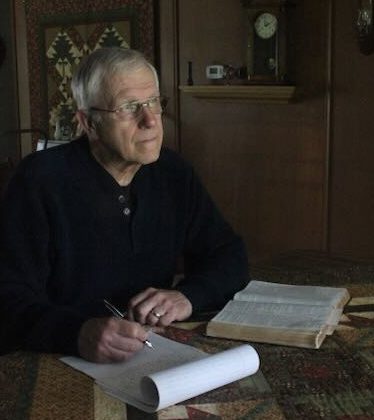
I am retired now, for the past 20 years actually. Since retiring I’ve had a few jobs, wrote a book, and write a weekly blog which goes out to my loyal followers, a few of whom regularly “Like” or comment. Everything I have written is based on the foundation of my scattered and multidirectional work history. Why follows is a list of jobs I’ve had. The lesson I hope it imparts is that there are no wasted experiences. My motivation to work came exclusively from a desire to eat regularly and to provide for my family. Read on and take hope.
1959. Drugstore summer job stocking shelves and dusting. The manager told me something important that I never forgot: “You are only worthy of your pay to the extent that you contribute to the success of the business of your employer.” I took that truth to heart and applied it all my life. That one sentence should be taught in school from day one.
1960. Temporary help, United parcel Service. I learned how a small guy could carry big objects if he knew how to do it right (we delivered furniture mostly). I began to like trucks.
1960. College student. Learned it was a waste of time and money if you don’t study.
1961. Soldier, U. S. Army. I learned to live with men who were different from me. I learned teamwork. I learned how to shoot a rifle, type reports, run a film projector, drive big trucks, sort & deliver mail, how to live in a foreign country, and how not to drive on rural roads.
1964. Lumberyard truck driver. Learned that having fun driving a truck was insufficient grounds for continued employment; they fired me.
1964. Factory laborer. Worked on the line building commercial refrigerators and drove trucks to deliver them. Learned about corrupt labor unions, observed the successful communication between the German-American bosses and the Puerto Rican line workers that helped make a high-quality product, worked in the experimental department for a boss who flew his own airplane to work from Connecticut to New York, learned an insulation foaming technique that is now commonly employed in the industry.
1965. Fleeing to Wisconsin, I found work in another factory, which also involved some driving. I liked the driving better than the line work.
1965. Car salesman. I learned that selling them was not as easy as driving them.
1965. Shoe salesman. I learned patience and the value of good customer service. One customer, after watching me wrap her purchase, said she’d hire me to wrap her Christmas gifts.
1967. Laborer for gas utility. Learned that drag racing dump trucks was frowned upon. Learned that cleaning pipe wrenches and kerosene lanterns was important work, that teamwork meant anticipating my crew’s needs, that layering clothing was critical during outdoor work in Wisconsin winters, that operating a backhoe is not as easy as it looks, and that training in emergency response is crucial.
1968. Serviceman for gas utility. Learned how to repair gas furnaces, water heaters, and other appliances. Learned how to get along with customers from all economic levels, of many different races, and all backgrounds as I performed repair work in their homes. Learned it was satisfying to solve problems.
During this time, I belonged to a union, and was selected to be a union steward. Everything I had experienced about union corruption in New York was counter balanced by the serious integrity of my union brothers at the gas company.
1973. Off hours gas monitoring & dispatch*. Learned the complexities of the gas distribution system, learned to be calm in the face of emergencies, learned that being alone at two AM in a vacant building is not fun, learned that alternating shift-work was bad for my psyche and my body. But the knowledge of the system and people that I gained was crucial to my further progress within the company.
1974. Service instructor*. Using my field experience, I created a formal training program for gas servicemen. Learned how to overcome resistance to new things, learned how to gain the respect of workmen older than I was, learned persistence in the face of opposition, learned I could not deal with a nitpicking, micro-managing, penny pinching boss, so I quit.
1977. Real estate salesman. Learned that selling was easy if you put the customer first. Learned that making a living this way was hard on the family. Family won; I quit.
1978. Combustion supervisor* for automotive manufacturer. Analyzed gas burning equipment and devised training programs for technicians to improve efficiency. Got reacquainted with corruption with seven unions on site, learned to like making training videos, learned what it’s like to get laid off when you’ve got a family to support.
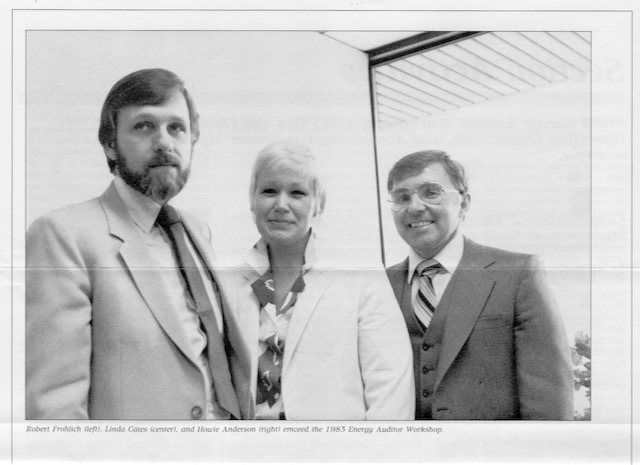
1980. Conservation supervisor* with my old gas utility. Learned humility when I returned to ask for job for which I was over-qualified. Learned satisfaction when all the pieces came together in this new management role: utility knowledge, sales experience, and communications skills. Learned to be tactful while working with anti-utility regulatory staff, and our own reluctant management. Learned the importance of hiring people who were smarter and better educated than I was, learned that despite their intelligence and skill, they needed me to help them be successful, learned the joy of seeing some of them advance to higher positions in the company. Learned to be flexible as my role transitioned to include gas marketing. Learned what it’s like to lose your job due to a company merger. Learned to appreciate having a friend in high places.
1994. Territory development manager* After the layoff scare, I remained with the gas utility company because one person saw an opportunity to do something new using a person with my skills and background. Learned how freeing it is to promote your ideas when you have nothing to lose, learned to deal with politicians and community leaders and tribal leaders, learned to lose my fear of failure, learned even more the importance of teamwork, learned to enjoy working all over again.
2001. Retired, involuntarily. Another merger eliminated my job(s) and the only choice was to gracefully accept an early out incentive.
2001 to present I have worked as: clerk in a city treasurers office, self-employed home handyman and remodeler, car dealership service greeter and driver, delivery driver for a pharmacy, and lay preacher in a church without a Pastor. Now I write for free, except for the rare occasion when someone buys my book.
You may have noticed that some jobs are marked with an asterisk (*). Those jobs were newly created; and in three of those cases, I was asked to apply for them. They were not career aspirations, they were out-of-the-blue opportunities.
Except for one month collecting unemployment after a layoff in 1980, I have been continuously employed since 1960. By the grace of God, I have always had food for the table and provision for the needs of my family.
Three possible lessons:
- There are no bad jobs. Every job is a learning experience.
- Work is necessary, and is fulfillment in and of itself. We were made to work and should work as long as we are able.
- Do not be afraid of change. Take advantage of the opportunities that come your way. True job security is a result of your being willing to work hard, accept change, and to never stop learning.
For even when we were with you, we would give you this command:
If anyone is not willing to work, let him not eat. 2 Thessalonians 3:10 (ESV)




 Robert Frohlich
This is so well done! Please share it with Our American Stories!
LikeLiked by 1 person
You have certainly lived a full life with so many varied experiences!!! I love reading your posts!
LikeLiked by 1 person
Amazing experiences Rob, well done, nothing is wasted for God. Truthful retelling is always inspiring and makes one feel ‘normal’ ha ha – and its okay! Good for you, to keep at it no matter what. Praise God
LikeLiked by 1 person